

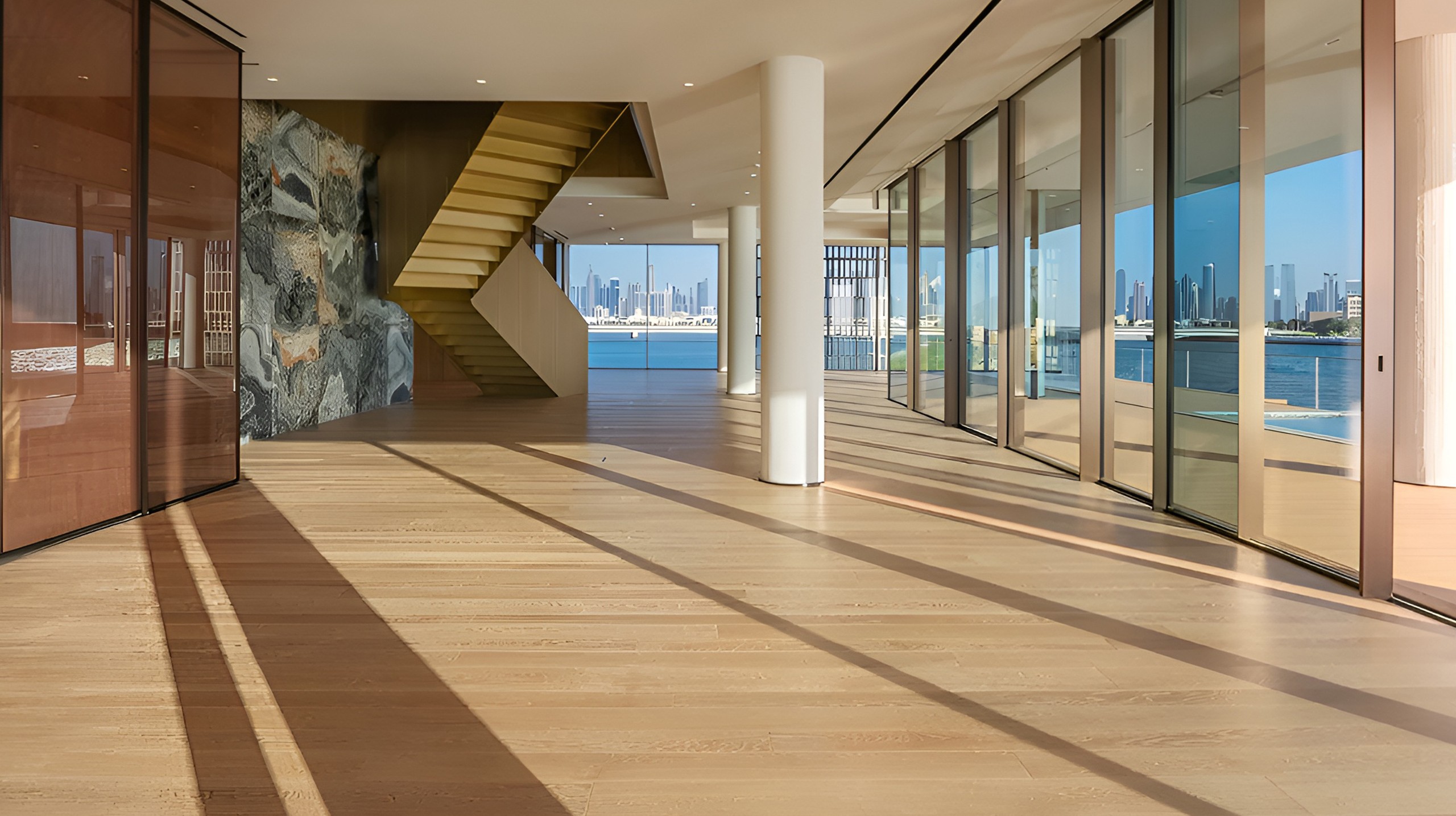
Engineered flooring uses geometric mosaic pieces to create beautiful wooden floors, and it comes in different lengths and widths to provide a great selection for all needs. It complements any interior. Its adoption in the region is also on the rise, with Parquet flooring being the most popular option for homeowners. According to a research report by Bonafide Research, the United Arab Emirates engineered wood market is expected to grow at a CAGR of more than 5% from 2024 to 2029. As an eco-friendly option with potential for recycling, engineered wood aligns with the UAE government’s vision for sustainability.
An important first step in answering the query “how to choose quality engineered wood flooring” is to understand the difference between solid wood flooring and engineered wood flooring. Any room above ground is best suited for solid wood flooring, whereas engineered flooring is well-suited for basement or slab installation areas. Let’s look at the considerations while selecting engineered wood flooring.
Key factors to consider
Wear or top layer: A thickness of 2-3mm is good, but 3mm or thicker is best for durability and multiple sandings.
Central layer: Opt for a multi-ply plywood core (which uses many thin layers) or a solid slat core, which typically uses one central solid layer placed between the top and bottom layer.
Top layer type: Go for durable wood species such as European White Oak or Hickory.
Plank length: A modern, expansive feel requires a greater percentage of longer, continuous planks with premium options exceeding 10 feet. So keep that in mind.
Finish Type: UV-cured, often with aluminium oxide, is recommended for durability and low chemical vapours.
Sustainability: Look for FSC (Forest Stewardship Council) or PEFC (Programme for the Endorsement of Forest Certification) certification to ensure the wood is sourced from responsibly managed forests.
Warranty: Despite all measures taken, a robust manufacturer’s warranty covering structural integrity and finish is a must for peace of mind.
General tips on flooring
There are several other factors which you need to consider for finalising the right flooring for each room of your house:
Budget: Decide on your budget, then select flooring that fits it.
Location: You should understand where the floor is being installed, whether it is a wet, semi-wet, dry or high-traffic location.
Maintenance: You should finalise the flooring depending on the maintenance needs. If you want less maintenance flooring or have the time to maintain it, choose based on your maintenance needs. It is important to care for the floor according to the flooring manufacturer’s instructions. If you can’t, then you should reconsider your needs.
Style and Comfort: Try to match your flooring to your home’s interior to give it an elegant look. You should understand your room’s style and choose flooring that complements it. For example, you can choose stylish, warm flooring for your bedroom that matches its interior.
Customised: You can get a solution tailored to your flooring needs that fits perfectly with your room style. The perfect home flooring solution should have expert engineers to listen to your plans and prepare drawings as per the need and specs of your individual rooms and create excellent designs suiting the different rooms.
Adaptable and Replaceable: The flooring in your house’s various rooms should be adaptable and easily replaceable.